
Does Water Really Change the Taste of Coffee?
When making coffee, most people focus on the beans, grind size and brewing method. But water is also an important part of the final cup.
Research has shown that the mineral composition of water can affect how flavour compounds are extracted from coffee.[1][2] This means that the same coffee beans can taste slightly different depending on the water used.
Why Water Matters in Coffee
Water contains dissolved minerals such as calcium and magnesium. These minerals can influence coffee extraction and affect characteristics such as acidity, bitterness and overall flavour.
Water that is too hard may also contribute to scale formation inside coffee machines, which can affect equipment performance over time.
However, removing all minerals is not necessarily the answer. Different mineral levels can work differently with different coffee roast profiles.
Tap Water
Singapore's tap water is safe to drink directly from the tap and meets national drinking-water standards.
PUB also states that additional filtration is not required to make Singapore tap water safe for consumption.
For coffee preparation, the reason for treating water is therefore usually not safety, but rather taste consistency and equipment protection.
Filtered Water
Filtered water can help reduce unwanted tastes and odours.
For example, activated carbon filters can reduce chlorine taste and odour when designed and certified for this purpose.
This can allow the flavour of the coffee to come through more clearly while retaining useful minerals in the water.
Pentair Everpure filtration systems are commonly used in coffee and foodservice applications to reduce chlorine taste, odour and particulates.
Softened + Filtered Water
In areas where hardness or scale is a concern, filtered water may also be combined with hardness treatment.
Systems such as Pentair Everpure Claris Ultra are designed to reduce carbonate hardness while maintaining a controlled mineral balance for coffee and espresso applications.
The aim is not simply to make the water as soft as possible, but to create a suitable balance between flavour and equipment protection.
Which Water Makes Better Coffee?
There is no single answer.
Different water compositions can affect coffee flavour, and preferences may vary depending on factors such as roast level and brewing method.
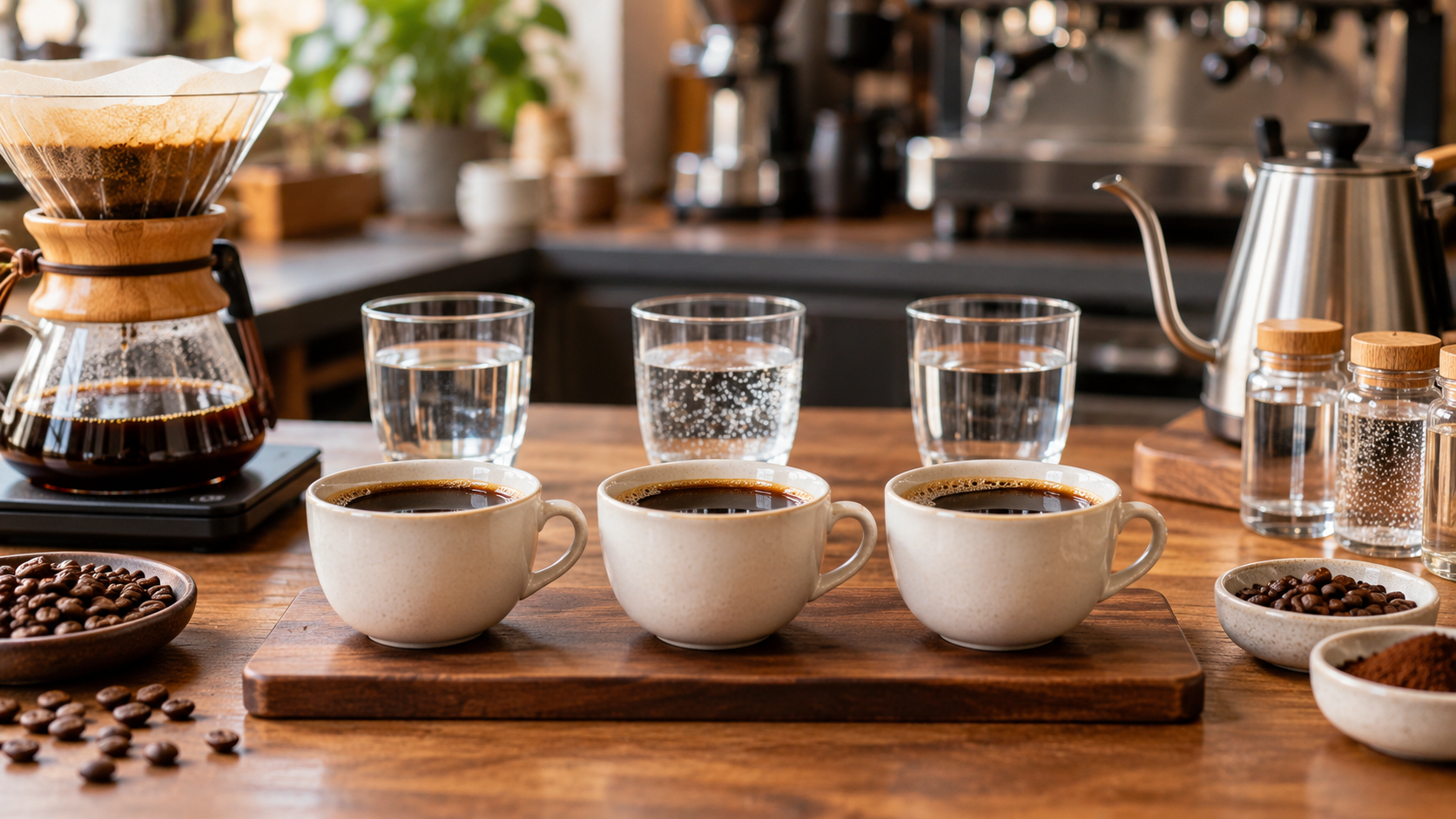
A simple way to explore this is through a tasting using the same coffee prepared with:
- Tap water
- Filtered water
- Softened + filtered water
Keeping the beans, grind size, brewing method and temperature the same makes it easier to compare how the water affects the cup.
For cafés, restaurants and coffee operators, having better control over water quality can help improve consistency while also helping to protect coffee equipment.
